Environmental Impact
KSIA becomes the airport where every decision is made with full visibility of its environmental cost, and where reducing that cost is as normal as reducing any other.
Why it matters
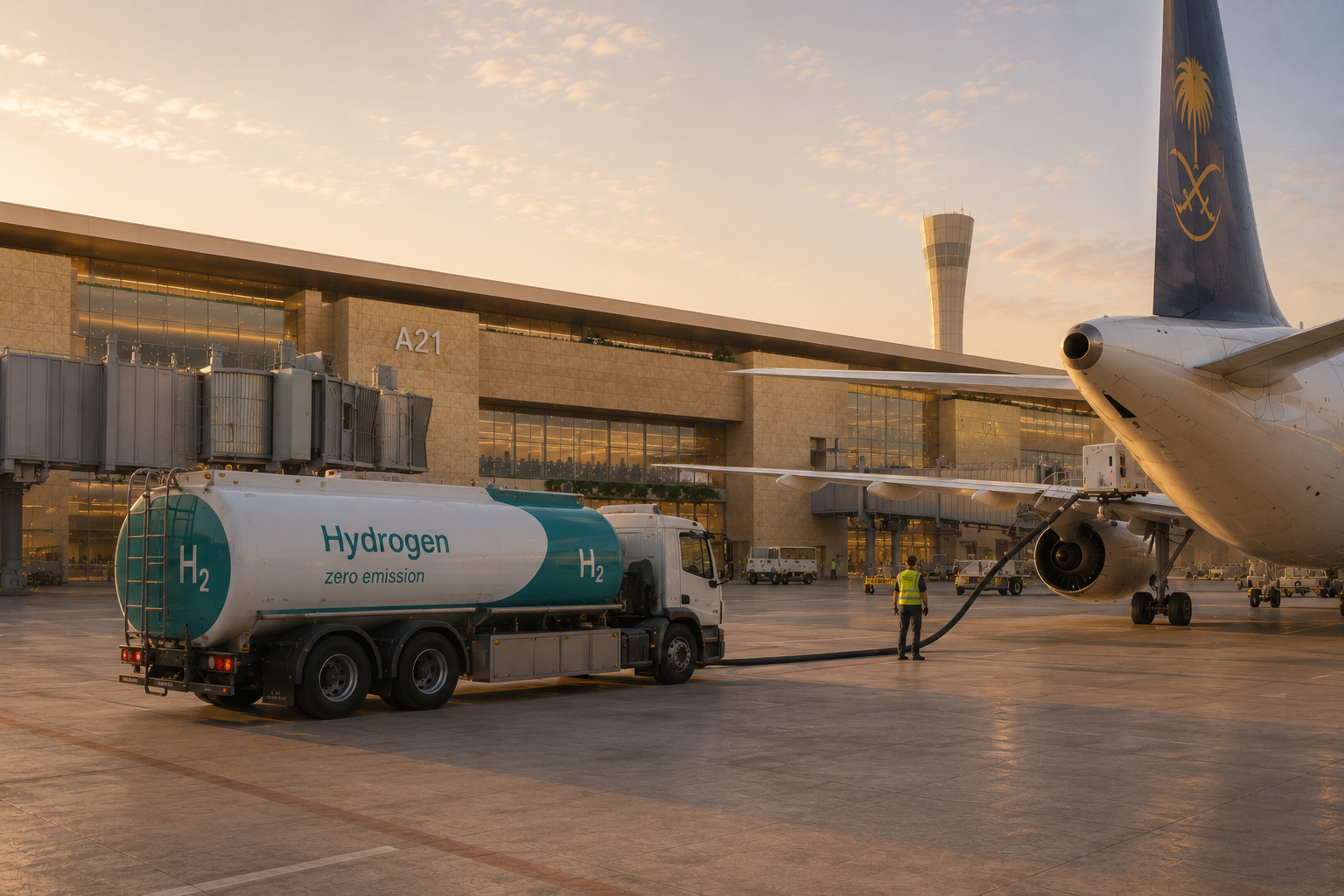
The pressure on airports to demonstrate genuine environmental responsibility has never been greater. Passengers, airlines, regulators and investors are all applying it simultaneously, and the bar for what counts as credible is rising faster than most organisations' ability to meet it.
For KSIA, this pressure arrives at a defining moment.
With new terminals, new assets and a clear mandate from Vision 2030, KSIA has the opportunity to embed sustainability into its infrastructure and operating practices from the ground up, building on what exists while setting a standard that the legacy estate was never designed to meet.
Best-in-class Sustainability Agenda
Directly tied to the sustainability, HSSE and quality objective (6), implementing best-in-class environmental standards that go beyond compliance and display genuine leadership globally
Environmental Accountability Embedded Operations
Supports the airport operations objective (4) by embedding environmental accountability into day-to-day decision-making, making sustainability a live operational metric rather than periodic reporting
Vision 2030 & National Targets
Connected to KSIA's position within Vision 2030, environmental performance is a national strategic priority, and KSIA's progress in this domain contributes directly to Saudi Arabia's commitments
The problems worth solving
With growing needs and finite resource, we cannot address everything at once. We recommend the innovation team focuses on known problems with unknown solutions: where urgency is clear but the answer is not yet fixed.
How to get started
Set a formal environmental performance baseline
Bring in an independent assessor to measure KSIA's full footprint across energy, water, waste and emissions, and define the targets the organisation will be held to.
Embed environmental criteria in procurement policy
Build sustainability standards into KSIA's supplier selection framework before the supply chain is established, making it a contractual baseline rather than an aspiration.
Invite scrutiny early
Bring an independent assessor in and use their findings to set the baseline, not to defend the current position.
Where we could start
Three directional concepts, showing what an innovation response could look like in practice. Not final specifications, but grounded starting points: enough to align on the problem being solved, the experience being created, and the outcomes we would expect to see if it works.

01
Clean energy and vehicle transition infrastructure
A phased physical infrastructure programme that prepares KSIA's estate for the transition to clean energy and electric ground vehicles, from EV charging points and renewable energy integration to the physical layout changes needed to support a fossil-fuel-free ground operation.
Benefits
KPIs Influenced
02
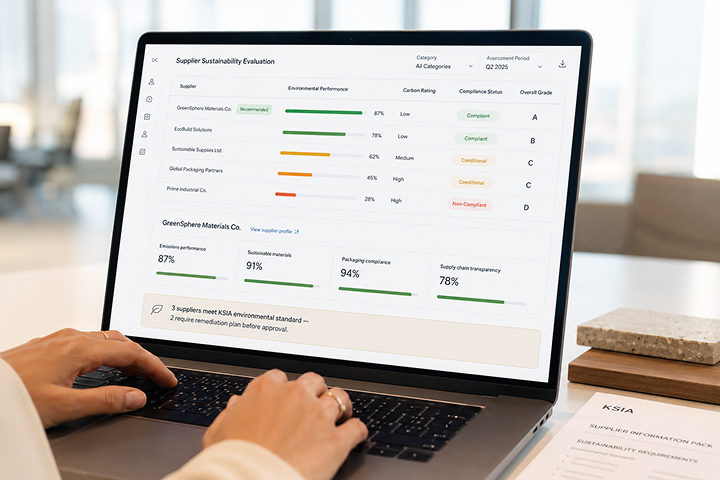
Sustainable procurement process
A structured approach that embeds environmental criteria into every supplier selection, contract negotiation and vendor review, making sustainability a built-in standard across KSIA's supply chain rather than a consideration that arrives too late to change anything.
Benefits
KPIs Influenced
03
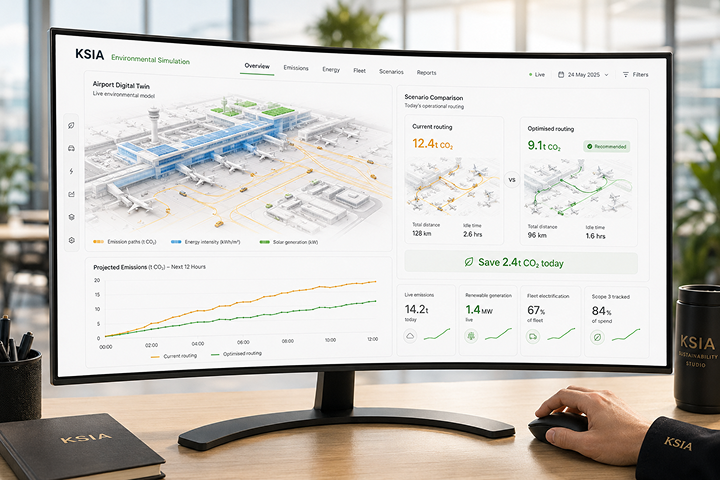
Environmental digital twin
A live simulation of KSIA's full environmental footprint, built on real sensor data from across the estate, that allows operations teams to model the impact of decisions before they are made, from scheduling changes and fleet deployments to construction sequencing and new terminal activations.
Benefits
KPIs Influenced